Put it on the class screen
This object lesson on prayer walks kids through the Lord's Prayer one line at a time, with an everyday object for each line pulled out of a lunch bag. Along the way they find out why "daily bread" mattered so much to families in Jesus's day, and that prayer is talking to a Father who already knows what they need (Matthew 6:8).
Get ready
Put the photo, name tag, crown, bread, coin and oven mitt in the lunch bag, in that order from bottom to top so the photo comes out first. Write the six lines of the prayer on a board or a sheet of paper if your kids can read.
Teach it: how not to pray
"Jesus's friends watched him pray all the time. One day one of them said, 'Lord, teach us to pray' (Luke 11:1). Before Jesus taught them what to say, he told them what not to do."
Read Matthew 6:7-8:
"In praying, don't use vain repetitions as the Gentiles do; for they think that they will be heard for their much speaking. Therefore don't be like them, for your Father knows what things you need before you ask him."
"Prayer isn't magic words, and it isn't about being loud or long. It's talking to someone who already knows you. So Jesus gave them a short prayer. Let's open this bag and see how it goes."
Teach it: one object for each line
Pull the objects out one at a time. Read each line from Matthew 6:9-13, then say a sentence or two about it.
- Family photo. "Our Father in heaven." Jesus told us to talk to God as our Father. In his own prayers he called God "Abba" (Mark 14:36), the everyday Aramaic word for father in a family.
- Name tag. "May your name be kept holy." God's name is special. We say it with love and respect, and we ask that everyone would.
- Crown. "Let your Kingdom come. Let your will be done, as in heaven, so on earth." God is King. We're asking for his good way to happen everywhere, starting with our house and our class.
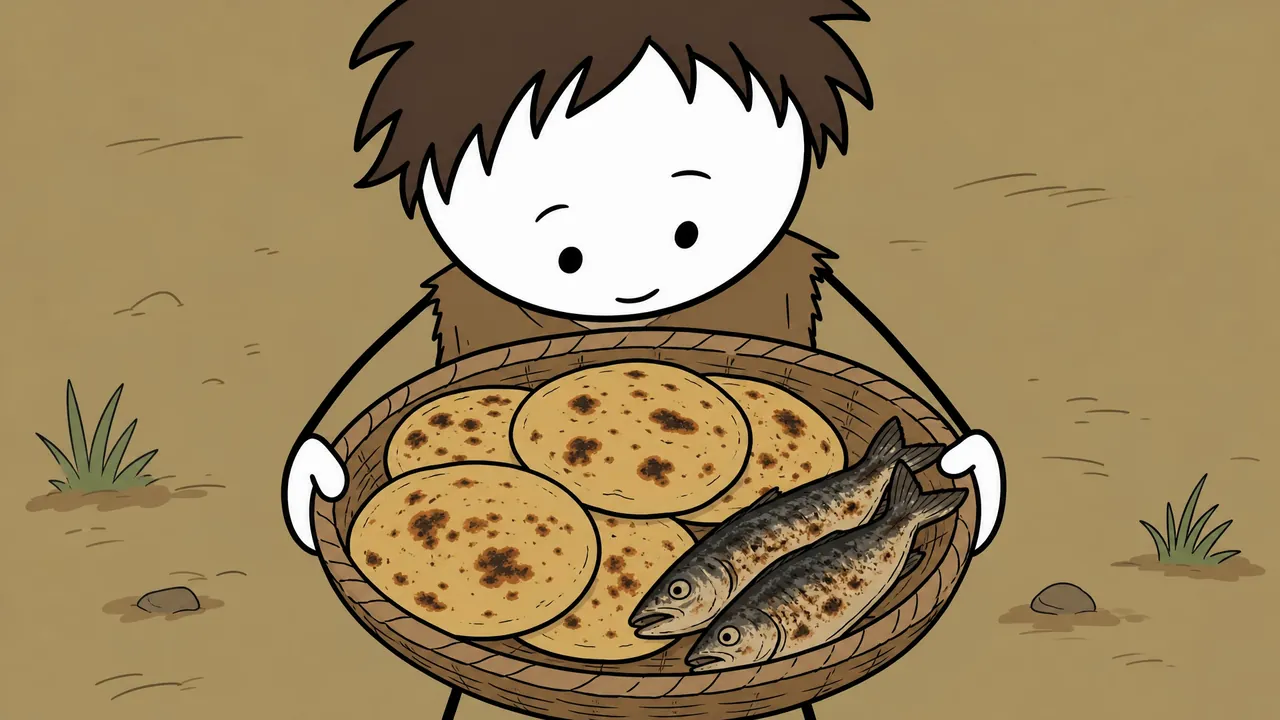
- Bread. "Give us today our daily bread." Not a whole year of bread, just today's. We ask God for what we need, and tomorrow we ask again.
- Coin. "Forgive us our debts, as we also forgive our debtors." When we do wrong, it's like owing a debt we can't pay. God forgives us, and he asks us to forgive other people too.
- Oven mitt. "Bring us not into temptation, but deliver us from the evil one." An oven mitt keeps your hand safe from something that would burn it. We ask God to keep us away from things that would hurt us or pull us toward doing wrong.
Hold up the crown again for the last line: "For yours is the Kingdom, the power, and the glory forever. Amen."
Did you know?
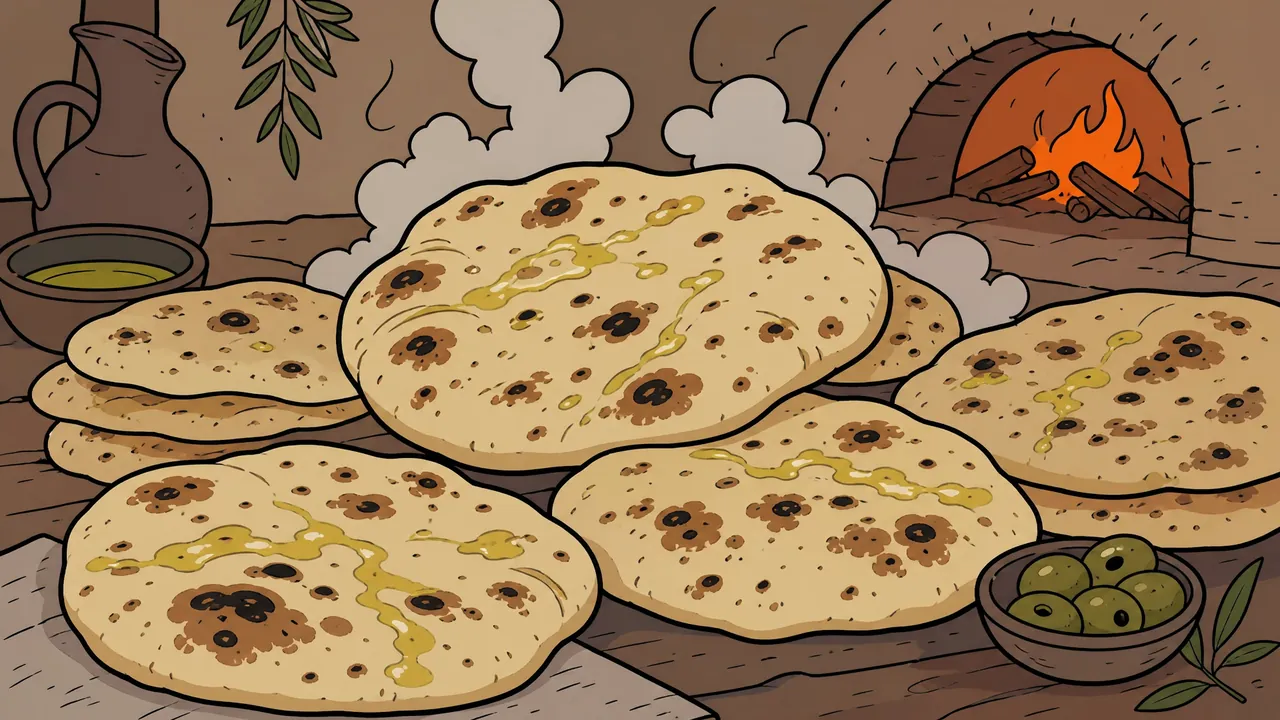
Daily bread was a real, everyday worry. Bread was the main food in Jesus's world. Food historians estimate it made up somewhere between half and three-quarters of what an ordinary person ate. And many workers were hired one day at a time. In one of Jesus's stories, a vineyard owner agrees to pay "a denarius a day" and pays everyone "when evening had come" (Matthew 20:2, 8). God's law even said to pay a poor worker before sunset, because he is counting on it (Deuteronomy 24:15). For a family like that, a day's wages bought a day's bread. When Jesus taught them to pray "Give us today our daily bread," he was talking about tonight's supper.
People prayed at set times of day. Daniel knelt and prayed "three times a day" (Daniel 6:10), and Psalm 55:17 says "Evening, morning, and at noon." In Acts, Peter and John walk to the Temple "at the hour of prayer, the ninth hour" (Acts 3:1), around three in the afternoon, and Peter goes up on a flat rooftop to pray "at about noon" (Acts 10:9). An early Christian handbook called the Didache, probably written within a century of Jesus, quotes the Lord's Prayer and then says to pray it three times a day.
Talk about it
- Jesus told us to call God "Father." What does that tell you about how God listens?
- Why do you think Jesus taught us to ask for today's bread, not a whole year's worth?
- Which line of the prayer is easiest for you to pray? Which one is hardest?
- What is one thing you could talk to God about every day this week?
Pray together
Hand the six objects to six kids. Pray the Lord's Prayer together slowly, and have each child hold up their object when you reach their line. Share the bread or crackers afterward.
Take it further
- Preschool: Make up a hand motion for each object (arms around yourself for "Father," hands on your head for the crown, rubbing your tummy for bread) and pray it with motions.
- Elementary: Make a "morning, noon and night" card for the fridge. In each box, kids write or draw one short prayer: a thank-you in the morning, a help-me at noon, a sorry or a goodnight in the evening.
- Preteen: Compare Matthew 6:9-13 with Luke 11:1-4. What's the same and what's different? Then have each student rewrite one line in their own words for their own week.
Questions teachers ask
What is a good object lesson on prayer for kids?
Put six everyday objects in a lunch bag, one for each line of the Lord's Prayer (Matthew 6:9-13), and pull them out one at a time. A family photo for "Our Father," a crown for "your Kingdom," a piece of bread for "daily bread," a coin for "forgive us our debts." Kids remember the prayer by remembering the objects.
What does "daily bread" mean in the Lord's Prayer?
Bread was the main food in Jesus's day, and many workers were paid one day at a time (Matthew 20:2, 8), so a day's wages bought a day's bread. Asking God for "today our daily bread" means asking him for what we need to live today, and trusting him again tomorrow.
How often did people pray in Jesus's day?
Many Jews prayed at set times of day. Daniel prayed three times a day (Daniel 6:10), Psalm 55:17 says "evening, morning, and at noon," and in Acts, Peter and John go to the Temple "at the hour of prayer, the ninth hour" (Acts 3:1). The Didache, an early Christian handbook, told believers to pray the Lord's Prayer three times a day.
Should kids memorize the Lord's Prayer or pray in their own words?
Both. Jesus said "pray like this" (Matthew 6:9), so the Lord's Prayer is a pattern as well as a prayer to say together. He also said not to pile up empty words, because the Father already knows what we need (Matthew 6:7-8). Kids can learn the words and use each line as a starting point for their own.
Why does the Lord's Prayer say "debts" in Matthew and "sins" in Luke?
Matthew 6:12 says "forgive us our debts," and Luke 11:4 says "forgive us our sins." Sin is like a debt we can't pay back. For a story kids can hold, try the [forgiveness object lesson with a jar of coins](/object-lessons/forgiveness-object-lesson-coins).
Topics: Prayer, Jesus, Forgiveness